
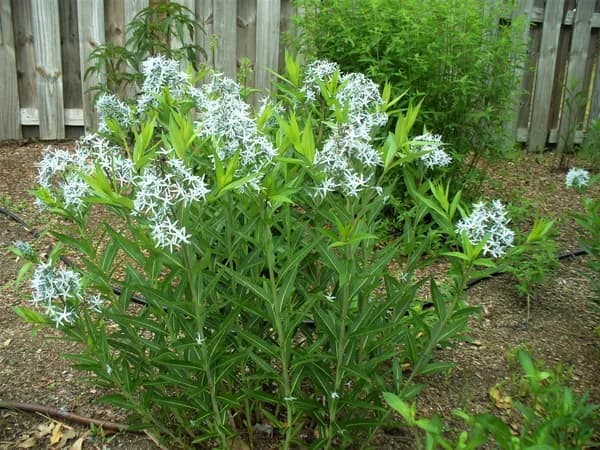
Eastern bluestar forms an upright clump with willow-like leaves and clusters of light blue, star-shaped flowers in spring.
- Height
- 60–92 cm / 2–3 ft
- Spread
- 60–92 cm / 2–3 ft
- Light
- Full sun / Partial shade
- Soil moisture
- Dry / Moist, well-drained
- Flowering
- Spring, Summer
- Foliage
- Deciduous
- Maintenance
- Low
- USDA zones
- 3a–9b
Planting
Choose sun or partial shade with moist, well-drained soil; occasional wetness is tolerated. Give it an open place in a perennial border, as too much shade can produce floppy stems.
Care
Shorten stems after flowering for a rounder outline. Remove spent flowers if you want to limit seedlings; divide dormant clumps in spring or autumn when needed.
Before planting: The foliage contains a toxic white latex.

Planting Eastern bluestar?
Find a landscaper nearby to help with planting and establishment.
Find a landscaperMore plants to explore
Sources & photo credit
Plant reference: NC State Extension Gardener Plant Toolbox. Content checked . Flowering seasons vary with local climate; USDA zones describe winter cold tolerance.
- Eastern bluestar: Susan Strine · CC BY 2.0. Resized, converted to WebP and cropped for display.
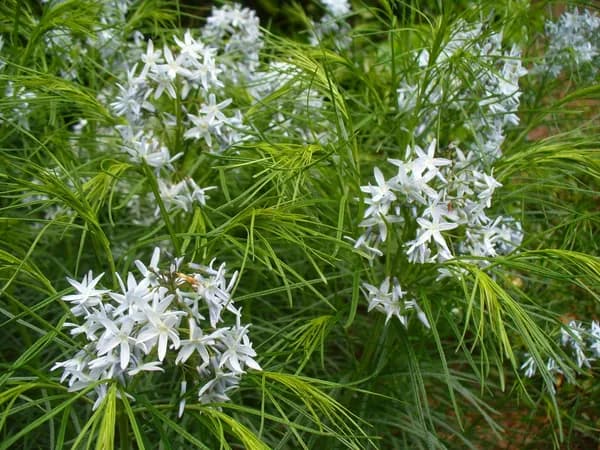
- Downy blue star: Susan Strine · CC BY 2.0. Resized, converted to WebP and cropped for display.
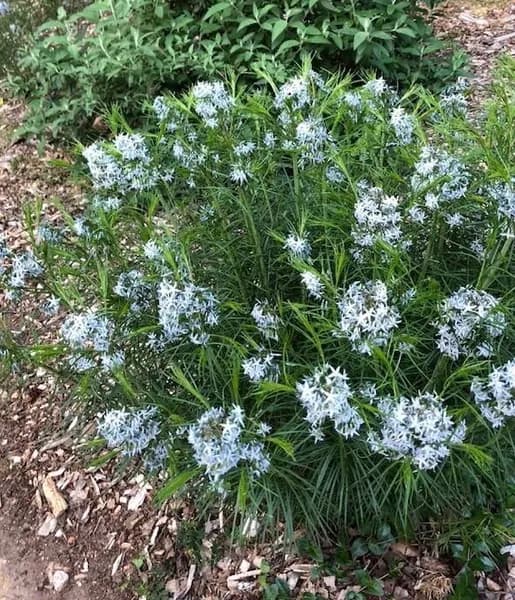
- Threadleaf blue star: Cathy Dewitt · CC BY 4.0. Resized, converted to WebP and cropped for display.
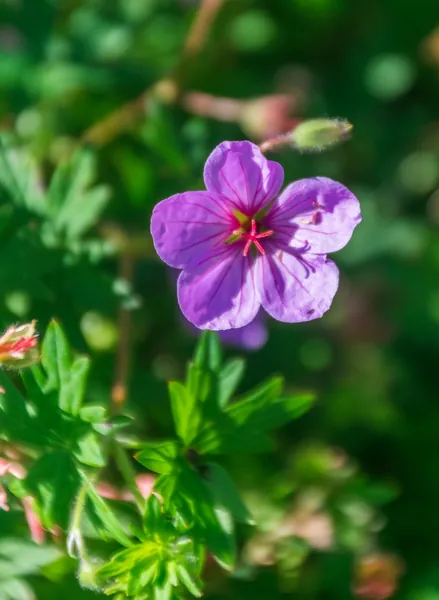
- 'Dilys' geranium: Krzysztof Golik · CC BY-SA 4.0. Resized, converted to WebP and cropped for display.