
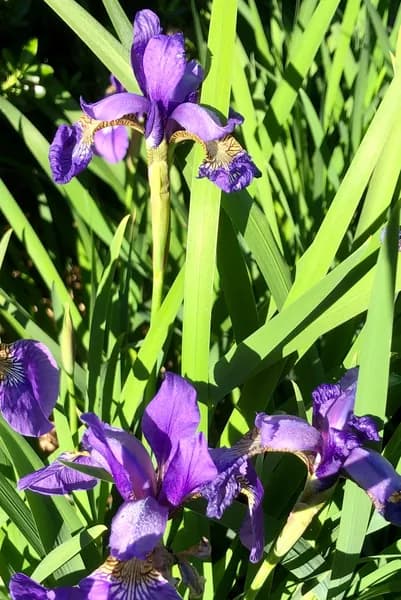
Siberian iris forms upright clumps of narrow, blue-green leaves with usually blue-purple flowers, while named cultivars offer a wider range of colours.
- Height
- 60–122 cm / 2–4 ft
- Spread
- 76–92 cm / 2.5–3 ft
- Light
- Full sun / Partial shade
- Soil moisture
- Moist, well-drained
- Flowering
- Spring, Summer
- Foliage
- Deciduous
- Maintenance
- Low
- USDA zones
- 3a–8b
Planting
Plant in fertile, slightly acidic soil that stays moist but drains well. Give it sun, with protection from strong afternoon heat in hot climates.
Care
Keep new plants consistently moist. Divide crowded clumps roughly every three years, or when flowering declines; keep replanted divisions moist while they establish.
Before planting: Sap can irritate skin; rhizomes are harmful if swallowed. Warm winters can also reduce flowering.

Planting Siberian iris?
Find a landscaper nearby to help with planting and establishment.
Find a landscaperMore plants to explore
Sources & photo credit
Plant reference: NC State Extension Gardener Plant Toolbox. Content checked . Flowering seasons vary with local climate; USDA zones describe winter cold tolerance.
- Siberian iris: Cathy Dewitt · CC BY 4.0. Resized, converted to WebP and cropped for display.
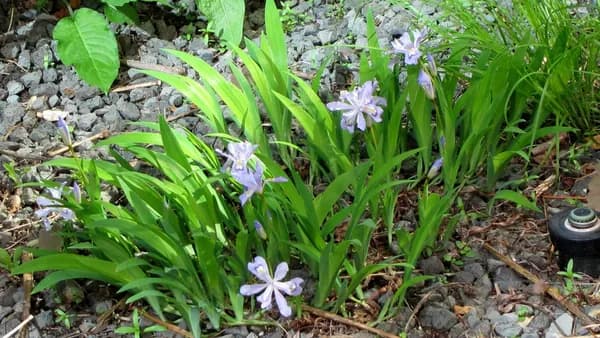
- Dwarf crested iris: cultivar413c · CC BY 2.0. Resized, converted to WebP and cropped for display.
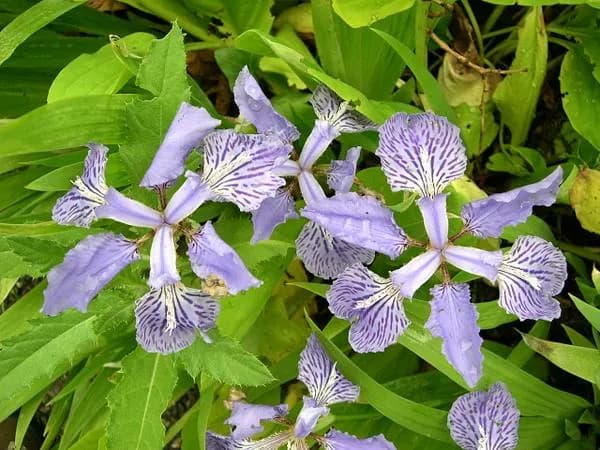
- Japanese roof iris: Photo by Jason Sturner · CC BY 2.0. Resized, converted to WebP and cropped for display.
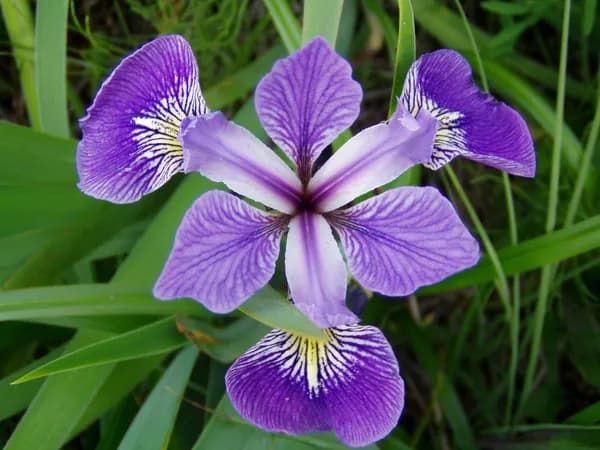
- Northern blue flag: Danielle Langlois · CC BY-SA 3.0. Resized, converted to WebP and cropped for display.