

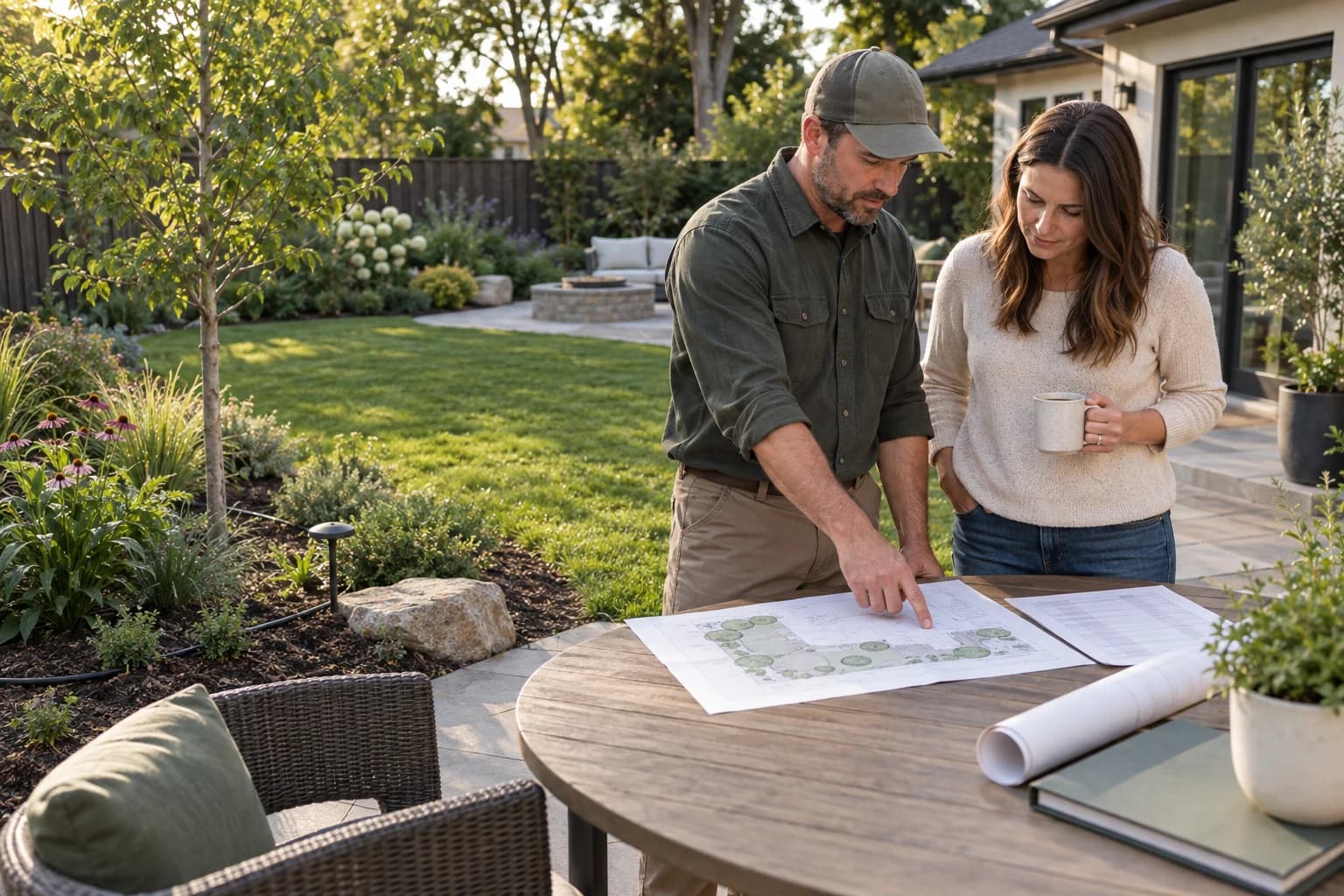
One landscaping quote might be $1,500; another might be $30,000. Both can be reasonable because landscaping covers anything from installing a small planting bed to rebuilding a backyard with drainage, irrigation, retaining walls, and a patio.
So the useful question is not simply “How much does landscaping cost?” It is “What result, on this property, with these materials, is included in the price?” The 2026 figures below give you a starting point. The rest of the guide will help you turn those national ranges into a realistic local budget—and compare quotes on equal terms.
1. How much does landscaping typically cost?
Scope matters more than the label on the quote. Angi’s US dataset—based on 32,752 verified projects—puts the average professional landscaping project at $3,515 in 2026. It also estimates general landscaping at roughly $4.50–$12 per square foot, while a tear-out and major remodel can reach $40 per square foot.
That range is wide because the work is not comparable. Refreshing a front yard with mulch, young plants, and lawn repairs bears little resemblance to rebuilding a sloped backyard that needs excavation, drainage, steps, retaining walls, and machinery access.
| Market | Useful 2026 planning reference | What it describes |
|---|---|---|
| United States | $1,248–$6,066; $3,515 average | Most professional landscaping projects in Angi’s reported dataset |
| Canada | C$5,000–C$15,000 small; C$15,000–C$35,000 mid-range | Small projects such as beds, sod, or simple paths versus projects adding patios, walls, lighting, or irrigation |
| United Kingdom | £250–£2,500 for a small-to-medium landscape gardening job; £5,000–£12,000 for a small garden redesign under 100 m² | Two different scopes: a limited job versus a designed garden makeover |
Do not treat these figures as currency conversions or assume they cover identical work. Each comes from a separate local cost guide with its own project definitions, taxes, labor market, units, and research method.
2. What factors affect landscaping prices?
Two gardens of the same size can produce very different estimates. Before comparing the totals, look at what is driving them:
- Size and quantities. Square footage, linear feet of edging or drainage, cubic yards of soil and mulch, and the number and size of plants all affect labor and materials.
- Existing condition. An open, level yard is cheaper to work in than compacted soil, buried rubble, failing hardscape, invasive growth, or a poorly graded site.
- Access. A narrow gate may prevent a mini excavator from reaching the backyard. Moving soil and stone by hand takes longer, while alternative equipment can add hire and handling costs.
- Materials and plant maturity. Gravel, concrete pavers, natural stone, hardwood decking, young shrubs, and specimen trees sit at very different price points.
- Drainage and utilities. Standing water, steep slopes, irrigation lines, electrical work, and underground services add design work and risk.
- Complexity and finish. Straight paths and mass planting are usually faster than curves, detailed cuts, integrated lighting, custom walls, or tight tolerances.
- Location and season. Labor, delivery, disposal, permits, demand, climate, and the planting window vary by region.
- Professional input. A maintenance crew, landscape designer, landscape architect, arborist, and drainage specialist solve different problems. The right expertise—and the price of it—depends on the job.
3. Landscaping costs by project type
Use the ranges below for an initial budget check. Because some sources quote installed work while others quote materials only, read the scope beside each number before comparing it with your estimate.
Lawn installation
For installed sod, Angi gives a US range of $950–$4,300. The Canadian and UK figures are material prices rather than installed totals: HomeStars lists sod at C$2–C$5 per square foot, while Checkatrade lists real turf at £12–£30 per m². Removing the old lawn, grading, adding topsoil, arranging delivery, dealing with restricted access, and repairing irrigation can push the finished price well beyond the turf itself.
Planting and garden beds
In the US, a flower bed installation commonly falls between $800 and $3,000, while a planted tree can range from $120 to $2,500. Bed preparation, plant count and size, soil amendments, mulch, edging, initial watering, and warranty terms all affect the total. In Canada, HomeStars says smaller softscape projects can start around C$2,000, while dense planting or mature trees can push the price to C$15,000 or more.
Landscape design
US landscape designers commonly charge $50–$150 per hour, according to Angi; its cited range for landscape architects is $70–$100 per hour. HomeStars places Canadian design and planning at C$1,500–C$8,000+ and a residential landscape designer at C$65–C$195 per hour. Checkatrade’s UK guide gives £50–£200 per hour, with £125 as its average, or roughly 10%–20% of the rebuild cost. Before comparing design fees, check whether each proposal covers a concept only, detailed construction drawings, plant schedules, permit support, site visits, or project management.
Irrigation
Angi lists a US sprinkler system at $1,700–$3,550. HomeStars gives C$2,000–C$5,000 for an automated sprinkler system in Canada. The quote will depend on the number of zones, controller type, water pressure, trenching, backflow requirements, drip lines, surface restoration, and whether the contractor is installing a new system or extending an existing one.
Drainage
US yard drainage averages $2,146–$7,173 in Angi’s 2026 guide, with simpler work below that range and complex systems reaching higher. HomeStars places Canadian drainage solutions such as French drains or catch basins around C$2,000–C$10,000. Checkatrade lists UK French drains at £150–£250 per metre and soakaways at roughly £1,000–£2,500, depending on construction.
A drainage quote should state where the water comes from, how the proposed system will collect it, and where it will go—not simply say “install drain.” A swale, catch basin, French drain, soakaway, or regraded surface addresses a different problem, and local rules may restrict where runoff can be discharged.
Hardscaping
Hardscaping often carries the largest material and equipment bill. Angi places a US patio at $2,000–$5,800 and a retaining wall at $3,250–$9,000. HomeStars gives Canadian hardscaping at C$15–C$60 per square foot, with full installations often totaling C$10,000–C$40,000+. In the UK, Checkatrade lists installed flagstone paving around £65–£80 per m² and wooden decking around £50–£120 per m², excluding extras such as handrails. When comparing prices, pay particular attention to excavation depth, sub-base construction, drainage, edge restraints, and the exact surface material; these are easy places for two specifications to differ.
Tree and shrub work
US tree trimming commonly runs $270–$1,800; tree removal is commonly $200–$2,000 or more. Tree size and condition, nearby buildings or power lines, climbing or crane access, stump work, and hauling tend to drive the price. Because mistakes can cause serious injury or property damage, verify that the company’s experience and insurance cover the exact work proposed rather than choosing on price alone.
4. Landscaping costs in the US, Canada, and the UK
United States: National platforms often report project totals or prices per square foot, but local variation is substantial. Labor and disposal in a high-cost metro, drought-tolerant work in the Southwest, and drainage-heavy work in a wet climate will not price the same way. Angi reports landscaper labor at $50–$100 per hour.
Canada: Dollar figures are in Canadian dollars unless a quote says otherwise. Short outdoor construction seasons, freeze-thaw requirements, material transport, and city-specific labor costs can all affect the total. HomeStars estimates landscaping crews at C$50–C$100 per hour and says labor can represent 30% or more of the project.
United Kingdom: Quotes commonly use day rates, square metres, or a fixed project price. Checkatrade gives a landscape gardener rate of £180–£280 per day. Prices in London and the South East are often higher, while access through a terraced house can add substantial handling time even for a small garden.
5. Hourly rates vs. fixed-price landscaping quotes
An hourly or day rate suits work that is uncertain or deliberately flexible, such as seasonal cleanup, pruning, investigation, or a short list of repairs. Ask how many people will be on site, whether the rate applies to each worker or the whole crew, which equipment is included, and whether travel and disposal are extra.
A fixed-price quote is easier to compare when the installation is fully defined. It should connect the total to quantities, material specifications, drawings, and a clear standard for completion. “Fixed” does not mean that every hidden site condition is included, so the quote should still explain allowances, exclusions, and how you will approve changes.
Large projects often combine the two: a fixed price for defined construction, allowances for products or plants not yet selected, and agreed hourly rates for genuinely unpredictable work.
6. What should be included in a landscaping quote?
A useful landscaping estimate should let you—or another contractor—understand exactly what is being built. Look for:
- site address, quote date, validity period, and contractor details;
- drawings or a written scope, with measured areas and quantities;
- site preparation, demolition, excavation, grading, and protection;
- named materials, sizes, colors, thicknesses, and acceptable substitutions;
- a plant schedule with species, quantity, and container or caliper size;
- irrigation, drainage, lighting, electrical, or utility responsibilities;
- labor, equipment, delivery, disposal, cleanup, and restoration;
- permits, inspections, taxes, and who obtains or pays for them;
- start window, estimated duration, milestones, and payment schedule;
- warranties, plant establishment or replacement terms, and exclusions;
- a written change-order process.
If a quote says only “landscape backyard” beside a total, you cannot tell what you are buying or compare it fairly with another proposal. Ask for the missing detail before signing, not after work begins.
7. Hidden or additional landscaping costs to consider
Many apparent “surprise” costs are tasks that were visible but never priced clearly at the start. Ask how the quote handles:
- Removal and disposal: old concrete, soil, roots, stumps, contaminated fill, or excess excavated material.
- Site correction: grading, drainage, compacted soil, poor topsoil, erosion, or hidden irrigation damage.
- Access and logistics: hand carrying, street permits, parking, crane or mini-excavator hire, and repeated delivery charges.
- Permits and specialist input: surveys, engineering, arborist reports, utility marking, and inspections.
- Aftercare: watering, mowing, pruning, seasonal cleanup, irrigation winterization, sealing, and plant replacement outside warranty.
For example, HomeStars’ Canadian guide puts soil amendments and disposal at C$500–C$3,000 and heavy-material delivery surcharges at C$100–C$500. Local amounts will differ, but every homeowner should ask about these categories before approving the budget.
8. How to compare landscaping quotes
- Give every company the same brief. Share measurements, photos, priorities, preferred materials, access limits, and timing. If you change the brief, send the same update to everyone.
- Normalize the scope. Put each quote into the same headings: prep, drainage, hardscape, lawn, planting, irrigation, lighting, cleanup, taxes, and warranty.
- Compare quantities and specifications. A lower price may simply include less base material, fewer plants, smaller specimens, or no disposal.
- Mark allowances and exclusions. Ask what happens if your final material choices exceed an allowance or the contractor uncovers different site conditions.
- Check the schedule and payment structure. A deposit, milestone payment, and final balance should follow a clear written contract and local rules.
- Verify the business. Review relevant experience, recent work, insurance, credentials where applicable, and who will actually perform specialist tasks.
- Ask each bidder to explain the gaps. A credible landscaper should be able to explain why their method or materials cost more or less.
The strongest quote is not automatically the cheapest one. It is the proposal that gives you a suitable design, a complete and understandable scope, credible execution, and a level of risk you are comfortable accepting.
9. How to find landscaping companies near you
Start with the work you need, not a generic search for “landscaper near me.” A company focused on lawns and planting may not build structural retaining walls; a hardscape specialist may not be qualified to diagnose a mature tree. For a mixed project, ask who will design the work, who will build each part, and which specialist trades will be subcontracted.
On Greendexo, use the landscaper map to search by location, then open profiles to compare the services, coverage areas, project photos, and contact details each business has published. Shortlist companies whose stated experience matches your project, and give each of them the same written brief.
Greendexo is a directory, not the contractor on your project. Confirm pricing, availability, insurance, credentials, permits, warranties, and suitability directly with the business before you hire.
Sources and methodology
Prices were checked on September 24, 2026. We kept each source’s local currency and units and did not blend unlike projects into one international average. Numerical estimates in this guide come from the following current cost guides:
- Angi: How Much Does Landscaping Cost? (2026)
- Angi: Yard Drainage Cost (2026)
- Angi: Professional Tree Trimming Cost (2026)
- HomeStars: A Guide to Landscaping Costs in Canada (2026)
- Checkatrade: Gardener and Landscape Gardener Prices (2026)
- Checkatrade: Garden Landscaping Cost (2026)
- Checkatrade: Garden Designer Costs (2026)
- Checkatrade: Garden Drainage System Cost (2026)