
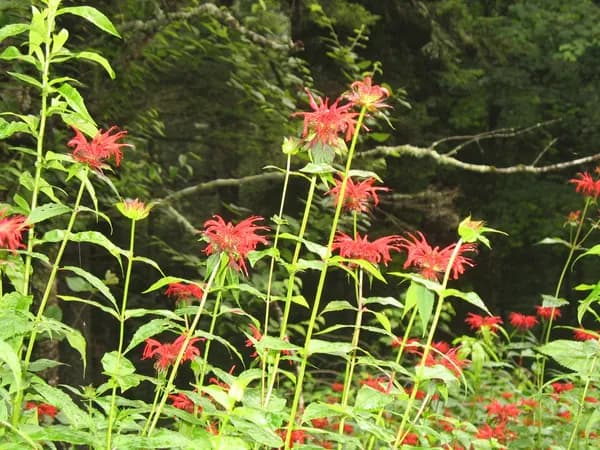
Scarlet bee balm combines red flower heads and mint-scented leaves, adding summer height to a moist border while attracting hummingbirds, bees and butterflies.
- Height
- 60–122 cm / 2–4 ft
- Spread
- 60–92 cm / 2–3 ft
- Light
- Full sun / Partial shade
- Soil moisture
- Moist, well-drained
- Flowering
- Fall, Summer
- Foliage
- Deciduous
- Maintenance
- Medium
- USDA zones
- 4a–9b
Planting
Plant in moist, well-drained soil in full sun or light shade. Give it room in a border or beside a pond, as underground stems spread rapidly.
Care
Water at soil level to reduce mildew risk. When cutting dead stems, retain 30–60 cm for stem-nesting bees.
Before planting: Powdery mildew and rust can affect the leaves, and the clump can spread quickly.
Planting Scarlet bee balm?
Find a landscaper nearby to help with planting and establishment.
Find a landscaperMore plants to explore
Sources & photo credit
Plant reference: NC State Extension Gardener Plant Toolbox. Content checked . Flowering seasons vary with local climate; USDA zones describe winter cold tolerance.
- Scarlet bee balm: Stacy Hodes · CC BY 4.0. Resized, converted to WebP and cropped for display.
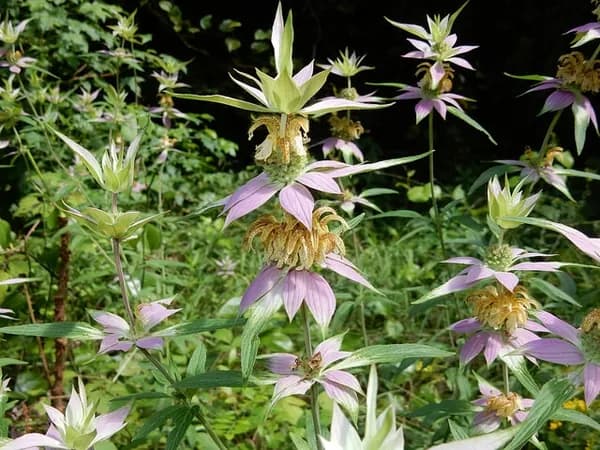
- Spotted beebalm: johnx12 · CC BY-SA 4.0. Resized, converted to WebP and cropped for display.
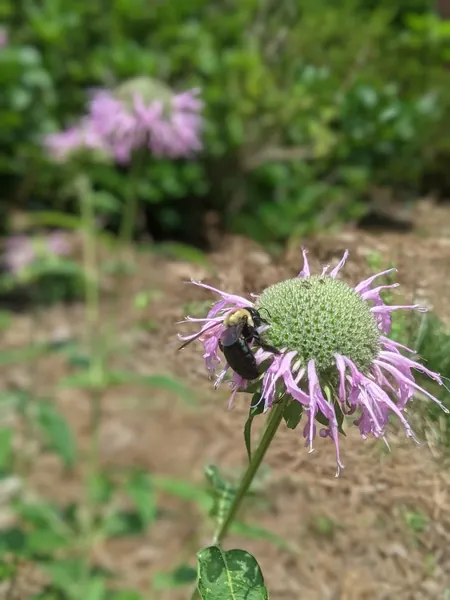
- Wild bergamot: Hope Duckworth · CC BY 4.0. Resized, converted to WebP and cropped for display.
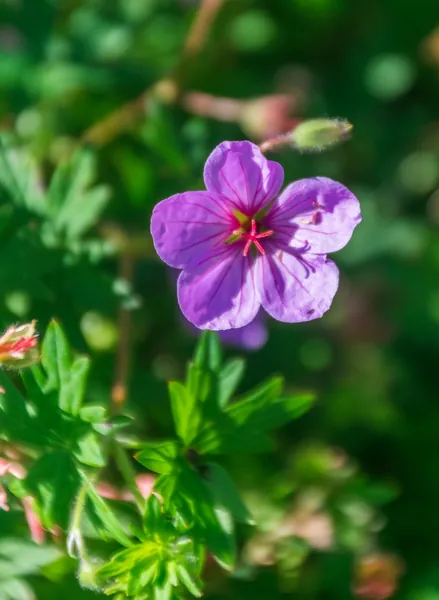
- 'Dilys' geranium: Krzysztof Golik · CC BY-SA 4.0. Resized, converted to WebP and cropped for display.