
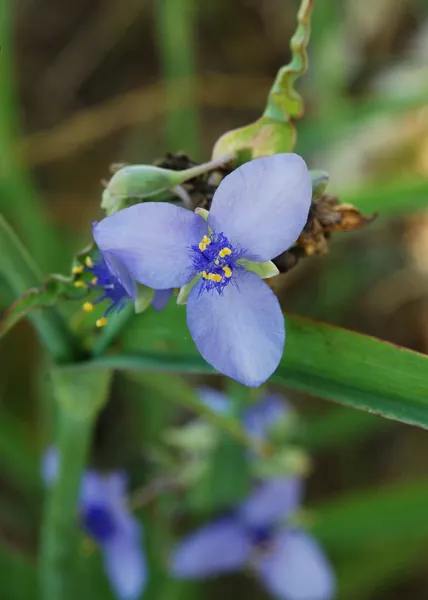
Ohio spiderwort forms clumps of grassy blue-green leaves with three-petalled blue to rose flowers, each opening for a single day.
- Height
- 60–92 cm / 2–3 ft
- Spread
- 45–77 cm / 1.5–2.5 ft
- Light
- Shade / Full sun / Partial shade
- Soil moisture
- Dry / Moist, well-drained
- Flowering
- Spring, Summer
- Maintenance
- Medium
- USDA zones
- 4a–9b
Planting
Choose sun or partial shade and moist, well-drained acidic soil. It tolerates clay, rocky ground and some dryness, but flowers less freely in deeper shade.
Care
Cut back untidy growth in midsummer to encourage fresh leaves and possible autumn flowers. Divide clumps when they become large; it also spreads by seed and offshoots.
Before planting: Self-seeding can make it weedy in favourable conditions.

Planting Ohio spiderwort?
Find a landscaper nearby to help with planting and establishment.
Find a landscaperMore plants to explore
Sources & photo credit
Plant reference: NC State Extension Gardener Plant Toolbox. Content checked . Flowering seasons vary with local climate; USDA zones describe winter cold tolerance.
- Ohio spiderwort: Geoff Gallice · CC BY 2.0. Resized, converted to WebP and cropped for display.
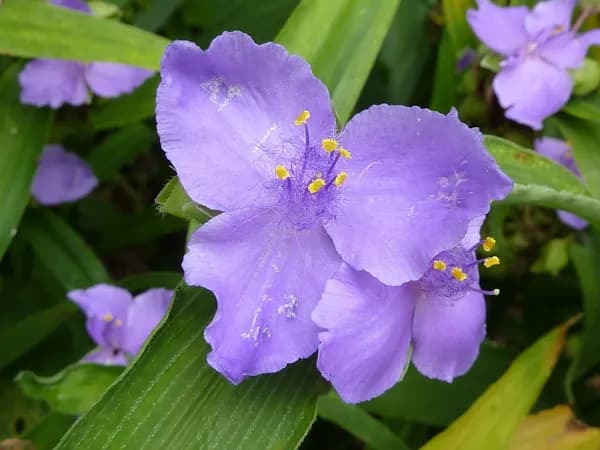
- Virginia spiderwort: Magnus Manske · CC BY-SA 3.0. Resized, converted to WebP and cropped for display.
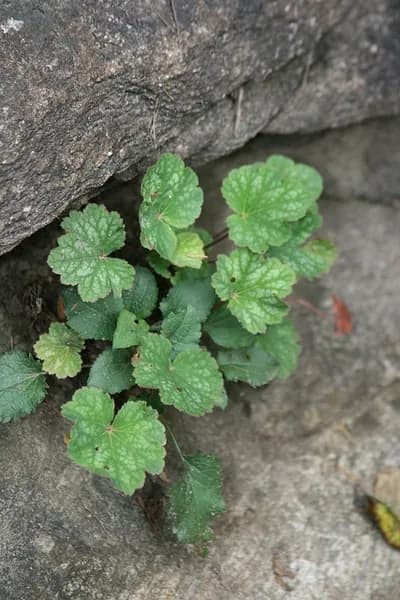
- American alumroot: Behnke Nurseries, Inc. · CC BY 4.0. Resized, converted to WebP and cropped for display.
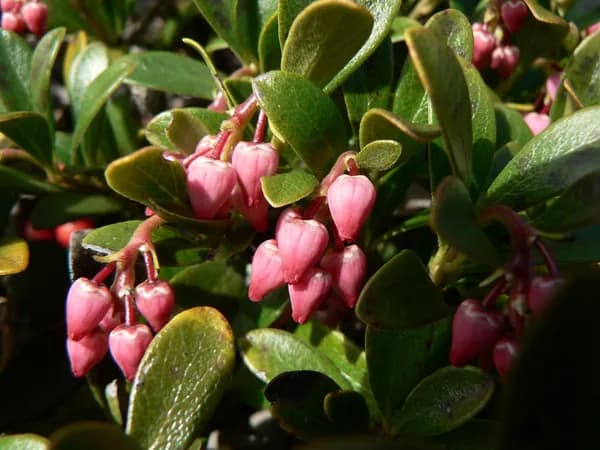
- Bearberry: Walter Siegmund · CC BY-SA 3.0. Resized, converted to WebP and cropped for display.