
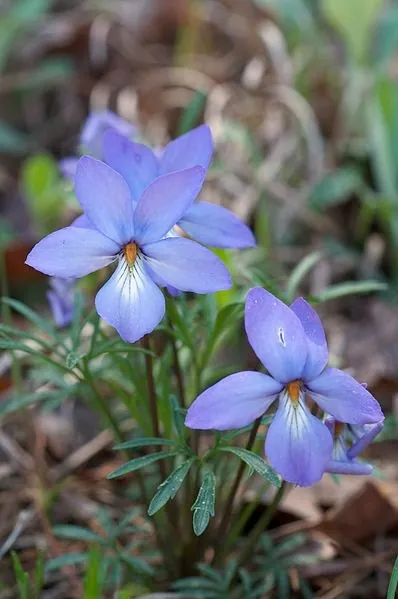
Bird-foot violet has finely divided leaves and large lavender-blue spring flowers, forming small clumps suited to rock gardens.
- Height
- 10–21 cm / 0.3–0.7 ft
- Spread
- 10–21 cm / 0.3–0.7 ft
- Light
- Full sun / Partial shade
- Soil moisture
- Dry / Moist, well-drained
- Flowering
- Spring, Summer
- Foliage
- Deciduous
- Maintenance
- Medium
- USDA zones
- 4a–8b
Planting
Choose full sun or partial shade with sandy or gravelly, slightly acidic soil. Excellent drainage is essential; a rock garden or open slope can provide a suitable setting.
Care
Keep the crown out of wet, slow-draining pockets. It can reseed when conditions suit it, but does not send out the spreading runners found in some other violets.
Before planting: This violet is harder to establish than many others and is particularly vulnerable to crown rot.
Planting Bird-foot violet?
Find a landscaper nearby to help with planting and establishment.
Find a landscaperMore plants to explore
Sources & photo credit
Plant reference: NC State Extension Gardener Plant Toolbox. Content checked . Flowering seasons vary with local climate; USDA zones describe winter cold tolerance.
- Bird-foot violet: Eric in SF · CC BY-SA 3.0. Resized, converted to WebP and cropped for display.
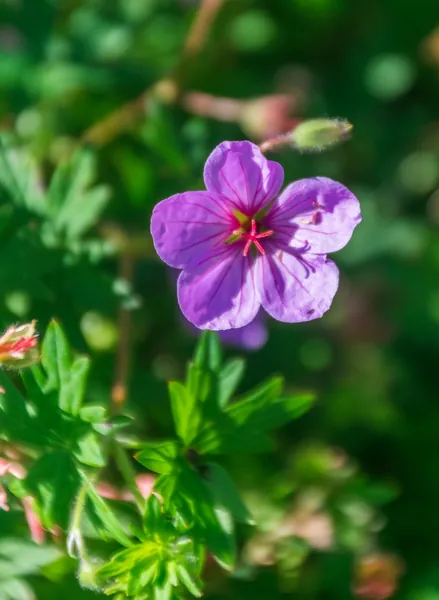
- 'Dilys' geranium: Krzysztof Golik · CC BY-SA 4.0. Resized, converted to WebP and cropped for display.
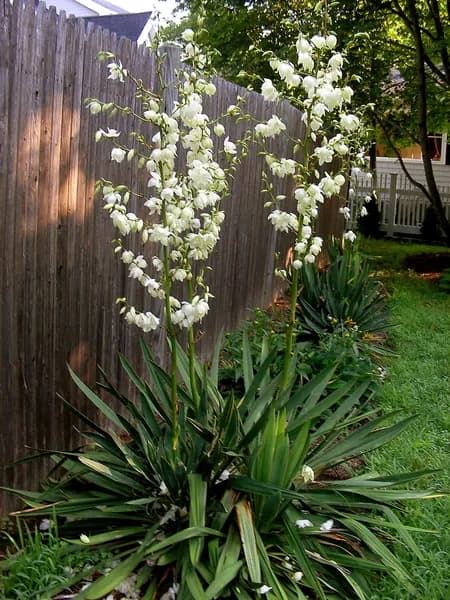
- Adam's needle yucca: Carl Lewis · CC BY 2.0. Resized, converted to WebP and cropped for display.
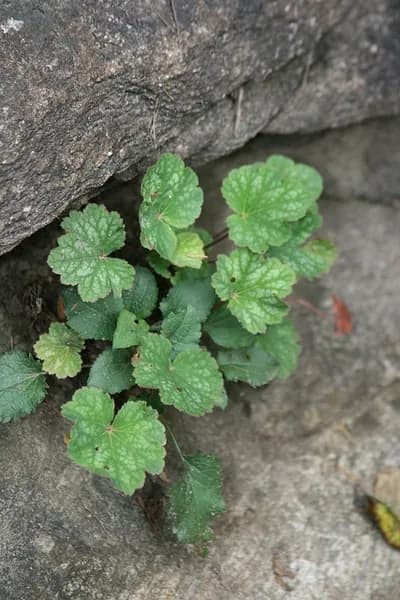
- American alumroot: Behnke Nurseries, Inc. · CC BY 4.0. Resized, converted to WebP and cropped for display.