
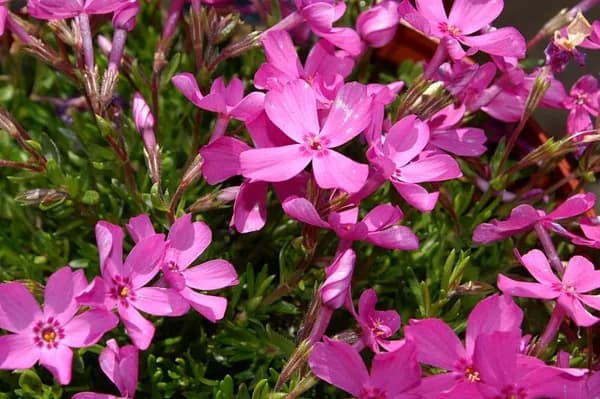
Creeping phlox makes a low, dense mat of needle-like leaves, covered in spring flowers that can spill over a wall or soften sunny slopes.
- Height
- 10–16 cm / 0.3–0.5 ft
- Spread
- 60–92 cm / 2–3 ft
- Light
- Full sun / Partial shade
- Soil moisture
- Dry / Moist, well-drained
- Flowering
- Spring
- Foliage
- Semi-evergreen
- Maintenance
- Low
- USDA zones
- 3a–9b
Planting
Plant in full sun and moist, well-drained soil; sandy or gravelly ground is suitable. In hot, humid summers, a little dappled shade can help.
Care
After flowering, shorten the stems by about half to keep growth dense and the outline compact. Older clumps may become sparse in the centre as growth moves outwards.
Before planting: Spider mites can affect plants in hot, dry conditions; rabbits may eat the foliage.

Planting Creeping phlox?
Find a landscaper nearby to help with planting and establishment.
Find a landscaperMore plants to explore

Sources & photo credit
Plant reference: NC State Extension Gardener Plant Toolbox. Content checked . Flowering seasons vary with local climate; USDA zones describe winter cold tolerance.
- Creeping phlox: David J.Stang · CC BY-SA 4.0. Resized, converted to WebP and cropped for display.
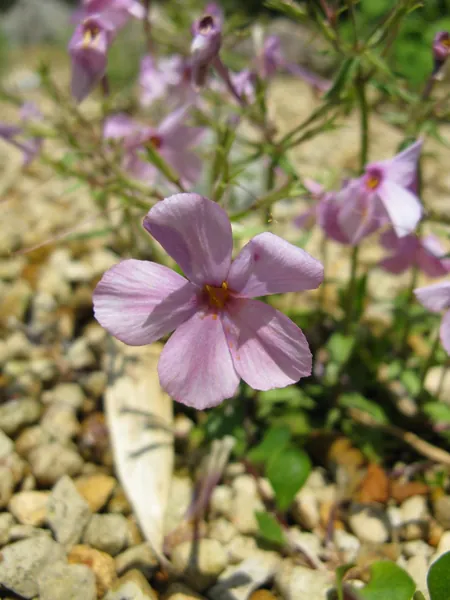
- Downy phlox: KENPEI · CC BY-SA 3.0. Resized, converted to WebP and cropped for display.
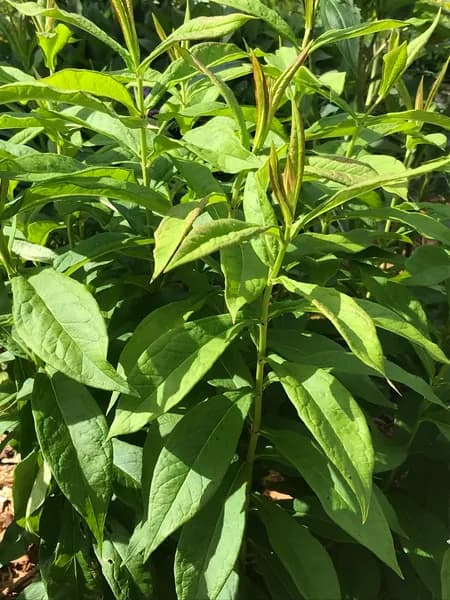
- Garden phlox: K. Andre · CC BY 2.0. Resized, converted to WebP and cropped for display.
- Woodland phlox: K M · CC BY 4.0. Resized, converted to WebP and cropped for display.