
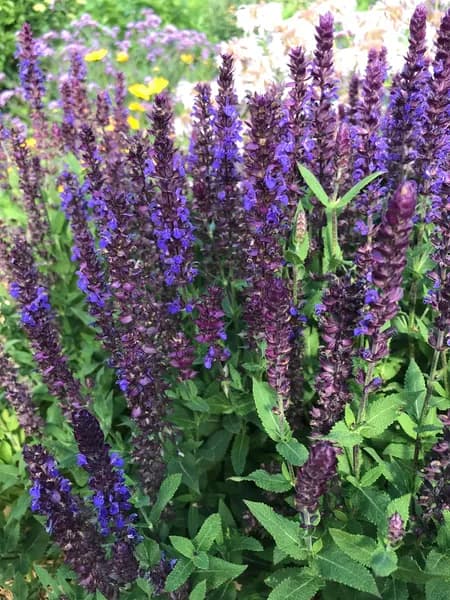
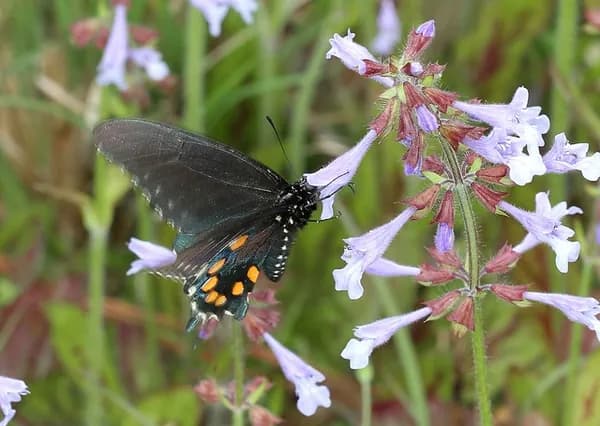
Woodland sage produces dense spikes of violet-blue flowers above a compact clump, drawing bees and butterflies to sunny borders and path edges in summer.
- Height
- 45–92 cm / 1.5–3 ft
- Spread
- 15–61 cm / 0.5–2 ft
- Light
- Full sun / Partial shade
- Soil moisture
- Dry / Moist, well-drained
- Flowering
- Fall, Summer
- Maintenance
- Low
- USDA zones
- 4a–8b
Planting
Choose sun or partial shade and well-drained soil. Sandy or gravelly ground is suitable, and established plants tolerate dry soil; use it towards the front of a border.
Care
Once a flower stem has finished and turned brown, cut it down to the basal leaves. Repeating this after each flush can encourage further flowering.
Planting Woodland sage?
Find a landscaper nearby to help with planting and establishment.
Find a landscaperMore plants to explore
Sources & photo credit
Plant reference: NC State Extension Gardener Plant Toolbox. Content checked . Flowering seasons vary with local climate; USDA zones describe winter cold tolerance.
- Woodland sage: K. Andre · CC BY 2.0. Resized, converted to WebP and cropped for display.
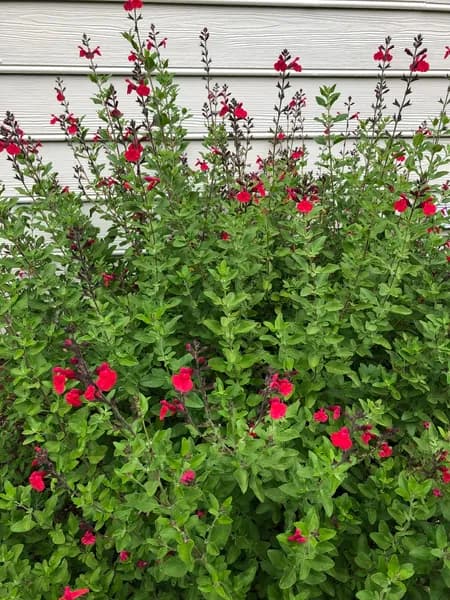
- Autumn sage: Cathy Dewitt · CC BY 4.0. Resized, converted to WebP and cropped for display.
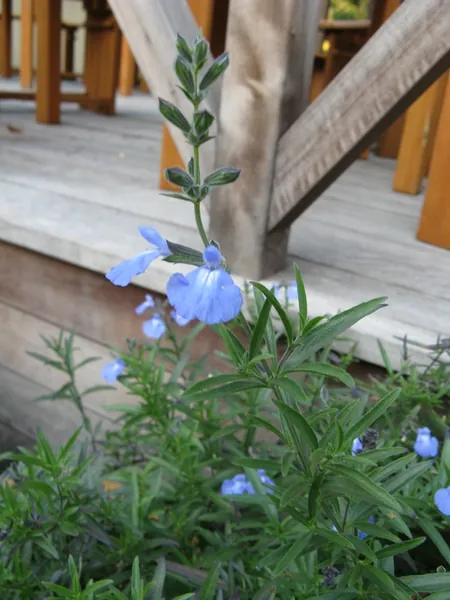
- Blue sage: KENPEI · CC BY-SA 3.0. Resized, converted to WebP and cropped for display.
- Lyreleaf sage: John Flannery · CC BY 2.0. Resized, converted to WebP and cropped for display.