
The maintenance reality: mowing versus border care
Homeowners often assume that a pure lawn is the lowest-maintenance garden option, but open grass demands weekly or fortnightly mowing throughout spring, summer, and autumn, alongside regular edge trimming, seasonal feeding, scarifying, and moss management. Neglected lawns deteriorate quickly into weeds and thatch.
Well-planned planting beds with evergreen shrubs, hardy perennials, and ground-covering plants require seasonal interventions rather than weekly chores. Once canopies close and a generous layer of bark mulch is applied, planted borders shade out weeds, retain moisture, and look attractive across all four seasons with far less regular effort than manicured grass.
Working with shade, steep slopes and wet ground
Lawns require generous sunlight to stay dense and healthy. Beneath mature deciduous trees, alongside high north-facing boundary fences, or on narrow side passages, grass invariably turns patchy, mossy, and pale. Repeated overseeding rarely solves the underlying light deficiency.
Converting difficult shaded or damp areas into woodland-inspired planting beds transforms problem corners into highlights. The Royal Horticultural Society highlights shade-tolerant ferns, hostas, hellebores, and dogwoods that thrive in cool, moist soil where lawn grasses consistently fail. Similarly, on steep banks, deep-rooting shrubs prevent soil erosion without the safety hazard of mowing slopes.
Allocating space for family living and wildlife
Start your layout by deciding what practical functions your outdoor space must perform. Keep lawn where you need open, flat space for children to play, pets to run, or casual outdoor seating. Give the lawn a clean, generous geometric shape—such as a defined rectangle, oval, or sweeping curve—which is vastly easier to mow and edge than awkward jagged corners.
Deepen perimeter borders to at least 1.2 to 2 metres rather than skinny 30cm strips against fence lines. Generous beds provide room for layered planting—canopy shrubs at the back, mid-height perennials in the centre, and low groundcovers at the front—creating a natural acoustic and visual buffer while offering food and refuge for pollinating bees and garden birds.
Phased garden transitions and professional design quotes
Balancing beds and lawn does not require a disruptive single-weekend overhaul. You can reduce lawn area incrementally by carving out deeper border curves, sheet-mulching turf under trees, or establishing a central seating island connected by mulched paths.
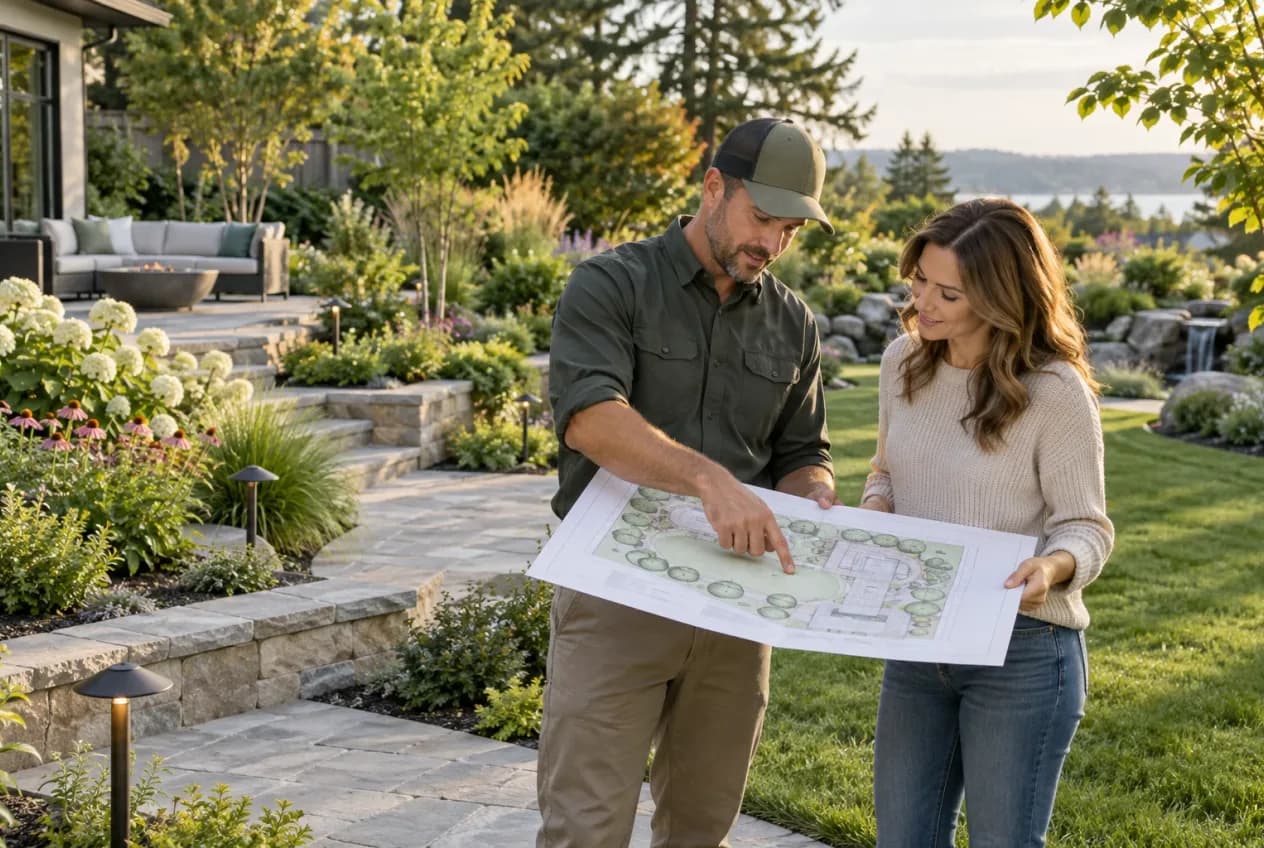
When requesting proposals from garden designers or landscape contractors, ask for separate lines detailing bed preparation, edging installation (such as steel, timber, or stone setts), soil conditioner, and plant supply. A clearly defined border edge is the key to preventing grass from creeping into beds and keeps mowing neat and effortless.
Put your plan into practice
Explore services, look through professionals’ work and send your garden brief.
Find a professionalSources and updates
Sources checked 2026-10-07.